|
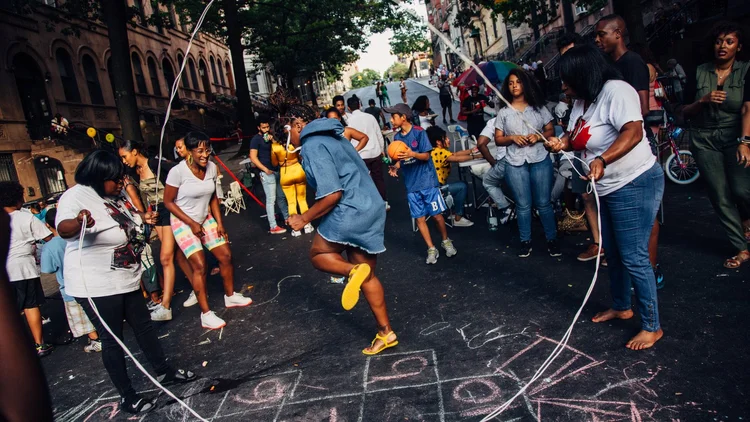
Thanks to GROUP HUG!, Stacey’s been dreaming: could DIY block parties be what we need this summer? Could this simple format be a transformative platform for building stronger communities and caring for our neighbors? Places like New Haven, Charlottesville, and Boston seem to think so, offering microgrants and toolkits to help folks get started. Beyond the joy of block parties, they have a history in movement-building. After all, Hip-hop was born at a block party in the Bronx and block parties helped build solidarity during the Civil Rights Movement. I love that museums like OMCA lead dynamic community block parties every Friday, and I wonder: how might cultural institutions help neighbors throw their own and how could this support local organizing and creative activism?
Braden’s been thinking a lot about the book Dopamine Nation by Anna Lembke. It has been important in my own life thinking about the choices I make, but also as I think about the work of cultural organizations. What does it mean that so many of our visitors and partners are coming to us wired? Or that an education program where they don’t look at their screens (or other sources) may start to send some into withdrawal? Time in nature, time with art, time with people, all at a slower pace, can be important parts of finding balance. But navigating to balance is sometimes painful. We are still wrestling with how our programs support other kinds of painful learning, are we ready for this? And are there ways to do it where time with an organization and all its benefits are not focused on the pain of the growth?
Linda’s been considering the lingering damages of secrecy–watching the documentary on Seymour Hersh, thinking about the 40th anniversary of Chernobyl, and not long ago watching All the President’s Men, and wondering how museums can be a part of revealing more that should be transparent and equally, how much of our own past could use some transparency.
|